Surveys are a powerful tool for customer feedback (if they’re well crafted). Otherwise, they can secretly sabotage your results. Even small wording issues or biases can distort respondents’ answers, leading to misleading data and bad decisions. And as you probably know, bad questions frustrate your customers and damage trust in your surveys.
In this article, we’ll explore the hidden dangers of bad survey questions (particularly in customer feedback surveys) and provide simple fixes. By avoiding these pitfalls, you’ll gather more honest, actionable insights from your customers.
1. Leading questions bias your feedback
A leading question steers people toward a specific response. The language might be emotional, flattering, or one-sided, and the outcome is always the same, i.e., the survey stops measuring opinion and starts shaping it. Ask someone, “How amazing was our new feature?” and you’re no longer running research but PR disguised as a survey.
A YouGov study showed that when a question contains a one-sided justification, agreement rates shoot up, even when the underlying opinion hasn’t changed. The wording alone distorted the outcome, which creates a false sense of approval. In customer research, that can mislead a team into thinking a feature is a hit when the phrasing simply pressured respondents into nodding along.
Mark Friend, Company Director at Classroom365, learned that lesson firsthand. He shared a moment early in his customer feedback work, when he asked schools:
“Does your school have a WiFi network that is fast and reliable enough for modern classroom use?”
“I thought it was a simple, direct query but it completely backfired on me,” he recalled. The question bundled multiple claims into one and implied there should be a positive answer. Worse, terms like fast and reliable enough were open to interpretation. “I was looking for numbers and all I got were subjective, vague responses,” Friend said.
More than 85%of schools answered yes – despite reporting ongoing issues to his helpdesk. The question didn’t expose a problem but buried it.
Friend fixed the issue by breaking the topic into neutral, measurable questions. Instead of asking whether Wi-Fi was “fast and reliable,” he asked for specifics: “What is the average number of simultaneous devices?” and “How often does an educator report a connection drop-out each month?” With response ranges tied to real data, his team finally had evidence they could act on.
Tip: Strip out loaded language and write questions that don’t signal a preferred answer. Replace any phrasing that flatters, exaggerates, or nudges. If you're unsure whether a question leans, test it on someone uninvolved.
2. Loaded questions and unwarranted assumptions
Some survey questions fail before a respondent even reaches the answer choices. A loaded question assumes something about the person taking the survey, and once that assumption is baked in, the respondent has no clean way out.
Take a simple scenario. A company asks:
"Where do you usually take your dog for grooming?"
For anyone without a dog, the survey stops making sense. Even if they want to participate, there’s no truthful answer available. The same trap shows up in product surveys. A question about satisfaction with an advanced feature assumes the respondent uses it.
Eric Neuner, founder of NuShoe Inc., knows how damaging this can be when the stakes are high. In his early work with factories, he asked managers one straightforward question: “Do you have quality control processes in place?”
The replies were unanimous yes but reality was different. Neuner said shipments came in with defect rates near 40%, including mold, delamination, and hardware failures. One factory even claimed “rigorous QC,” yet his team ended up correcting 12,000 pairs from a single container – all with the same stitching defect. The question had assumed competence, which blinded him to the real issue.
He replaced it with a different kind of question: What was your rejection rate on your last three shipments?
Hard numbers forced honest answers. If a factory couldn’t produce them, it was clear inspections weren’t happening. That shift changed the relationship entirely. Instead of vague assurances, Neuner could identify real gaps and address them. His team has since processed more than 1.5 million returns in 2024, in part because brands finally saw what was actually happening in their supply chain.
Tip: Write questions that leave room for every respondent to answer truthfully. If a topic doesn’t apply to everyone, start with a filter question or offer an option like “Not applicable.” And whenever a question rests on a guess about the respondent’s behavior or status, rewrite it. No one should feel boxed in by the premise of the question.
3. Double-barreled questions (two-in-one traps)
Some survey mistakes are loud while others quietly sabotage your data. Double-barreled questions fall into the second category. They bundle multiple ideas into a single prompt, then force people to respond with one answer, which makes responses impossible to interpret.
Consider a question like:
"How satisfied are you with the pay and work benefits of your current job?"
Two topics, one rating. If someone scores it a three, what does that mean? Disappointed with pay and happy with benefits or mixed on both? You’ll never know. The same issue shows up in customer surveys when companies ask whether someone is satisfied with product quality and support in one go. A combined score hides the truth you’re actually trying to uncover.
This mistake burned Pavlo Tkhir, CTO at Euristiq. His team once asked clients:
“How satisfied are you with the new features released in the last quarter?”
It sounded reasonable; in reality, it masked a major problem. “We released up to ten new features in three months,” he said. “If one critical feature was a failure and the rest were perfect, the customer would give a neutral score or 4 out of 5.” That’s exactly what happened. Overall satisfaction looked strong, but behind the scenes, usage of one feature had plummeted 70%. The bundled question hid a serious issue that needed attention.
Tkhir’s team fixed the flaw by splitting the question into separate ratings for each important feature. Once they did, the weak spot became obvious and fixable.
Tip: One question = one idea. If a question includes and or or, it’s a red flag. Break combined topics into separate questions so each answer reflects a single concept. Instead of asking whether an app is useful and easy to use, rate its usefulness and usability on their own. Clarity in the question leads to clarity in the data and that’s the whole point, isn’t it?
4. Irrelevant or invasive questions
Irrelevant questions are those that don’t relate to the respondent or the survey’s goal, waste their time, and erode patience. Meanwhile, invasive questions – the ones that dig too deep into personal matters – can break trust in an instant. I’ve put these into one category, as both can tank your completion rates and quietly corrupt your data.
Kellon Ambrose, Managing Director at Electric Wheelchairs USA, told me he once ran a survey with a well-intentioned (but ultimately misguided) question: “What’s your estimated household income?”
The idea was to help the company segment customers and personalize experiences. “We thought it would give us better insight into our audience,” Ambrose said. “But we didn’t stop to ask if it was appropriate.”
The question backfired. “When more than half of the participants left that portion blank, that’s when we realized we’d dropped the ball,” he explained.
Their audience – mostly seniors and people with disabilities – were understandably wary of sharing financial details. For groups that are often targeted by scams, such questions can feel intrusive or even unsafe.
Ambrose and his team quickly scrapped the question and introduced a new internal rule: never ask for information that appears on sensitive documents. “We now treat privacy as a trust issue, not a data issue,” he explained.
Remember: modern consumers are privacy-aware, and even one overreaching question can make your brand seem tone-deaf or untrustworthy. And if someone does answer despite discomfort, their response may be inaccurate or deliberately vague, hurting data quality and giving you a false sense of insight.
Tip: Before adding each question, ask yourself: “How will this help me take action?” If you can’t justify it, remove it.
For personal or demographic data, make the question optional. Alternatively, if it’s really important, provide broad ranges instead of exact figures, like “Which income range does your household fall into?” Keep such sensitive items for the end, as once you've built some trust, you’ll have a higher chance of getting responses.
5. Confusing or unclear questions
If a question makes your respondents go “Huh?”, then there’s a problem you should quickly address in your survey.
Confusing or unclear questions often come from poor wording, insider jargon, or overcomplicated phrasing. These are the kinds of questions that could sound clever in a meeting but confuse people in real life.
William Fletcher, CEO at Car.co.uk, told me he discovered this problem the moment customer feedback started coming in for one of his surveys. His team asked: “How happy are you with our process after the sale?” The question seemed clear internally, as it was meant to cover everything from paperwork to delivery follow-ups. But customers read it differently.
“Someone talked about finance, someone else talked about delivery, and someone else mentioned aftercare,” Fletcher said. “What was wrong was that ‘post-sale process’ was our word, not theirs.”
That small wording mistake blurred their feedback so badly that the team couldn’t act on it. Once they rephrased it to “How easy was it to complete your paperwork after purchase?” responses became clear, and participation increased by more than 40%. “Being clear is always better than being smart, especially when you want people to give you their time,” Fletcher concluded.
Tip: Use straightforward language that matches how your audience communicates. Avoid jargon, acronyms, and double negatives – unless you’re sure every respondent understands them.
If you need to include a technical term, give a short example for context (for instance, “tablet PC, such as an iPad or Android tablet”). I also recommend testing each question with someone similar to your audience and ask them to explain it back to you. If their understanding doesn’t match your intent, revise it!
6. Biased or poorly designed answer options
Bad survey questions aren’t only about the wording – your answer options can also quietly sabotage your results. Even a clear question can produce messy data if the choices are biased, incomplete, or confusing.
The most common issues I’ve seen are unbalanced scales, overlapping ranges, missing options, and poorly structured lists. These design flaws frustrate respondents, force them into inaccurate answers, or skew your data toward whichever option seems “close enough.”
And that’s certainly not what you’re looking for.
Tyler Denk, CEO of beehiiv, told me he saw this problem in an early customer feedback form. His team asked, “What led you to sign up for beehiiv?” and then offered a long list of similar options. These were: growth tools, analytics, monetization, and improved deliverability.
“It didn’t work,” Denk said. “People had to guess which one was best, and we saw answers biased toward the first few options.” Even though the question was fine, the options created noise.
What the team did was rework the question into a ranked, single-function format that tied responses to real user behavior in the first week. “It immediately improved how we segment users by motivation and predict upgrade paths,” Denk told me.
Aaron Whittaker, VP of Demand Generation and Marketing at Thrive Internet Marketing Agency, shared another example, this time about overlapping and incomplete ranges.
In one of his early client surveys, he asked: “What is your company size? (Options: 1-10 / 10-50 / 50+).” Whittaker admits that it broke two key rules – mutual exclusivity and collective exhaustiveness.
Companies with exactly 10 or 50 employees fit into two categories, while large enterprises didn’t fit anywhere. The error surfaced when he noticed inconsistencies in segmentation data compared to their CRM records. He fixed it by updating the ranges to 1-9 / 10-49 / 50-249 / 250 or more, aligning with standard business classifications. “That one change restored data integrity and improved how we profile and serve client segments,” he said.
Tip: Make sure numeric ranges don’t overlap and include all possible values. Keep scales balanced and symmetric (for example, two positive, one neutral, two negative). If you’re listing several items, I suggest randomizing their order in online surveys to reduce order bias. Include “Other” or “Not applicable” when appropriate so people aren’t forced into inaccurate choices.
7. Construct validity problem
Some questions sound solid on paper, but the data they produce has nothing to do with the thing you intended to measure. That’s a construct validity problem. You think you’re measuring loyalty, but the question only captures a polite thumbs-up.
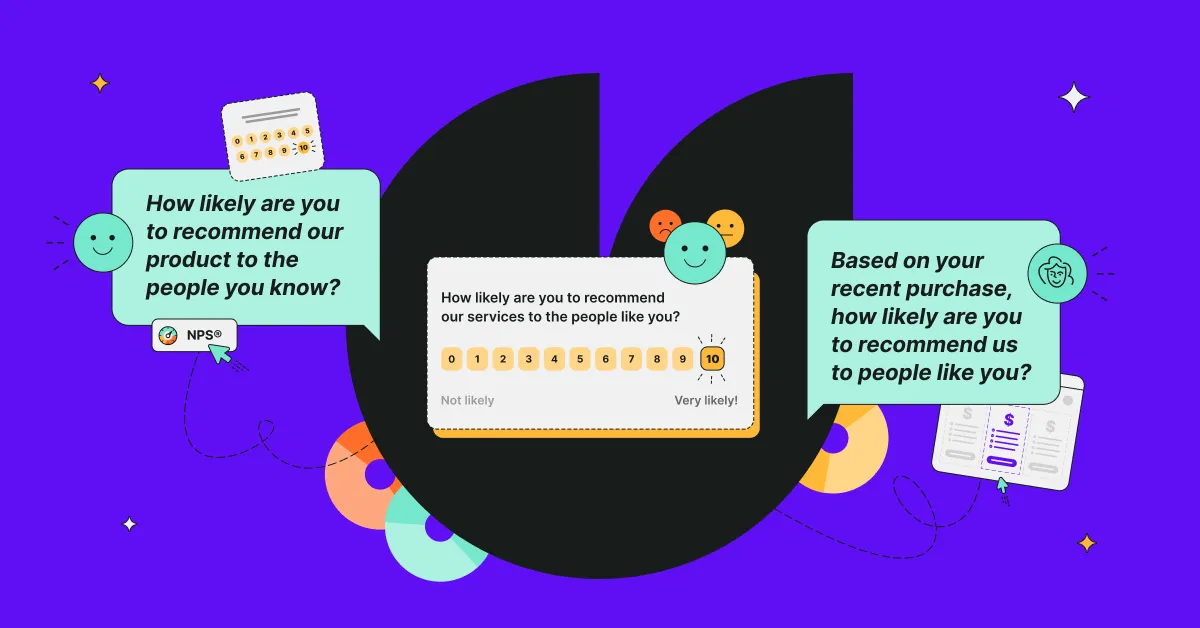
Šarūnas Bružas, CEO of Desktronic, ran into this issue with a question that many companies rely on: “Would you recommend our product to a friend?”
The wording felt positive and familiar, but it created a false signal. “People often answered yes out of politeness,” he explained. The question wasn’t measuring loyalty or advocacy but sentiment at best, and courtesy at worst. The results looked encouraging, yet return purchases told a different story. Customers said they would recommend the product, but almost none actually did.
To fix the problem, Bružas replaced the hypothetical with behavior-based questions:
“Have you recommended our product in the last three months?” and “What made you recommend it or not recommend it?”
“It gave me the real facts about what people liked or disliked,” he said. Once the answers reflected actions, not polite opinions, his team finally understood which improvements would drive genuine loyalty.
Tip: Match the question to the behavior or outcome you want to measure. If you’re trying to understand loyalty, ask about actual referrals or repeat purchases. If you want to understand product satisfaction, ask about the experience itself, not a hypothetical future action.
Bad survey questions don’t have to spoil your customer feedback strategy
As I’m sure the examples here have shown, bad survey questions can sneak quite easily into a questionnaire. A single unclear phrase or poorly designed answer option can throw off your data and frustrate respondents.
The key to avoiding that is clarity and focus. When your questions are simple, neutral, and relevant, people give honest, thoughtful answers that lead to real insights. And, the good news here is that fixing bad survey questions is usually straightforward. Small adjustments like using everyday language, balancing your scales, and keeping questions short can make a big difference in how people respond.
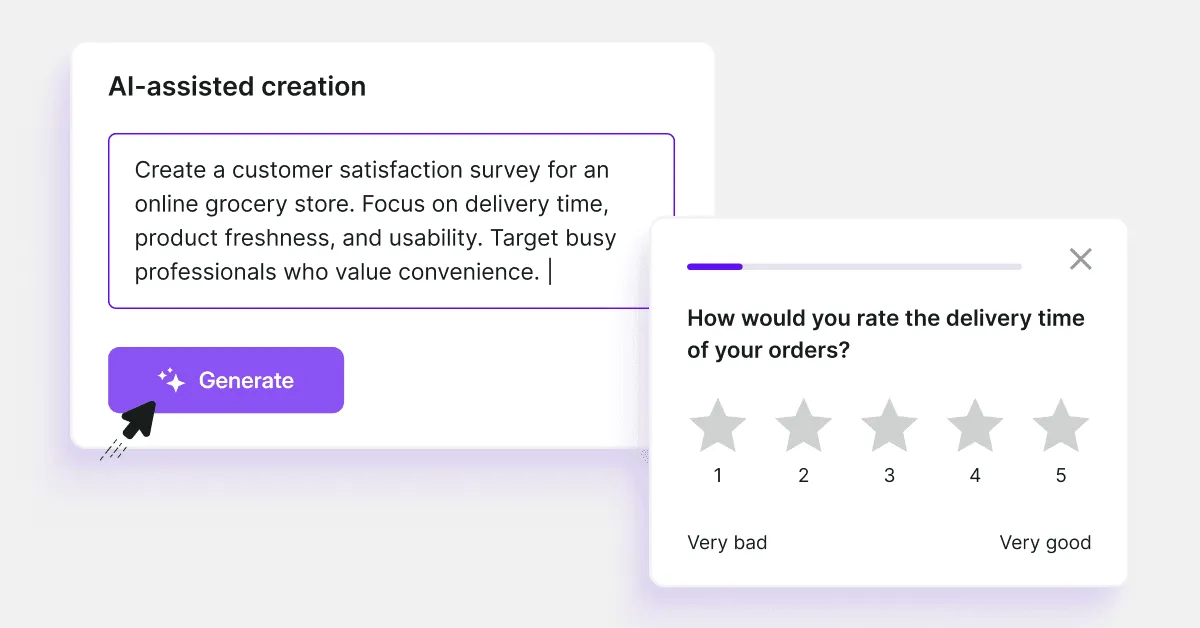
To avoid as many issues with bad survey questions as possible, give Survicate a try. It’s built to make survey creation easy and intuitive, both for you and for the people filling it out. You can customize everything, design clear and balanced questions, and count on an interface that keeps the process smooth from start to finish. Plus, our platform even saves answers from unfinished surveys. So, if an unideal question does creep in despite your best efforts, you won’t lose any of your other responses.




.svg)

.svg)