Your survey feedback shouldn’t merely live in a dashboard nobody checks until the next quarterly review. It does a much better job sitting in your Salesforce CRM, right next to the contact, account, opportunity, or case it belongs to.
When a customer gives you a low NPS score, that answer can become much more than a number in a report. It can:
- update a field on their contact record,
- alert Customer Success,
- create a follow-up task,
- trigger a Salesforce email asking a promoter for a review,
- flag a risky account before churn moves from “maybe” to “too late.”
In other words, feedback becomes something your CRM can act on.
That matters because survey tools and CRMs are often treated like separate worlds: one collects what customers think and the other tracks what they do. But the best Salesforce survey tools close that gap by turning feedback into usable CRM data.
TL;DR: Here’s a quick overview of all the tools covered in this article.
Comparison of Salesforce Survey Tools
| Tool | Type | G2 rating | Who is it for? |
|---|---|---|---|
| Survicate | Customer feedback platform with native Salesforce field mapping and AI analysis | 4.6/5 | Teams that want feedback syncing into Salesforce workflows without enterprise-level complexity |
| SurveyMonkey | Survey platform with Salesforce response mapping | 4.4/5 | Teams automating survey sends from Salesforce events and mapping responses back to CRM records |
| Zonka Feedback | CX feedback platform with Salesforce response mapping | 4.7/5 | CX teams syncing NPS, CSAT, and CES into Salesforce |
| SurveyLab | Survey platform with Salesforce email integration | 4.4/5 | Teams sending personalized survey links from Salesforce emails |
| Qualtrics | Enterprise experience platform with Salesforce workflows | 4.4/5 | Large companies running complex research and VoC programs |
| Medallia | Enterprise experience platform with Salesforce workflows | 4.5/5 | Enterprise sales, service, and contact center teams |
| Typeform | Form builder with Salesforce record mapping | 4.5/5 | Teams using polished forms for lead capture and qualification |
| ProProfs | Survey and form tool with Salesforce sync | 4.3/5 | Small teams that need simple surveys and lead capture |
| Surveypal | CX feedback platform with Salesforce response mapping | 4.4/5 | Service teams collecting feedback after support or onboarding |
| Mopinion | Digital feedback platform with Salesforce forms | 4.1/5 | Digital teams collecting website and app feedback |
How I reviewed these Salesforce survey tools
A Salesforce integration can mean very different things depending on the tool.
In one case, it may simply let you add a survey link to a Salesforce email. In another, it can map survey answers to Salesforce fields, update records, trigger follow-up workflows, or create new leads and cases. Same label, very different reality.
So I didn’t treat “integrates with Salesforce” as enough on its own.
For each tool, I checked how useful the integration is once feedback needs to become CRM data. In particular, I looked at:
- How survey data moves between the tool and Salesforce, including whether the flow is one-way or supports some form of two-way data use
- Whether responses can be mapped to Salesforce fields, objects, or records
- Whether the tool can create or update Salesforce records, such as leads, contacts, accounts, cases, or opportunities
- Whether Salesforce events can trigger surveys or follow-up actions
- How much setup the integration appears to require
- Which plans include Salesforce integration, and whether it’s gated behind higher tiers, add-ons, or custom pricing
- What users tend to praise or complain about, based on public review signals
I also reviewed vendor documentation, pricing pages, integration guides, AppExchange listings where available, and recent product information.
The goal was to understand what each Salesforce survey tool is actually good for: simple survey distribution, lead capture, post-case feedback, CRM reporting, operational feedback workflows, or larger enterprise VoC programs.
Because once you look past the “Salesforce integration” badge, the differences get pretty big.
A quick note before the comparison
I'm Team Survicate, so I know our product well, including where it’s strong and where another tool may be a better choice.
That’s why this comparison focuses on fit, not just feature count. Some teams need simple survey links in Salesforce emails. Others need lead capture, post-case feedback, enterprise VoC workflows, or survey answers that update Salesforce fields in real time. The comparison below shows where each tool fits best. Listed brands are not placed in order of importance or ranking of any sort.
On the 17th of June 2026, content specialist Wojciech Maroszek fact-checked and updated the entire guide to clarify comparison methodology and expand review sections.
Survicate
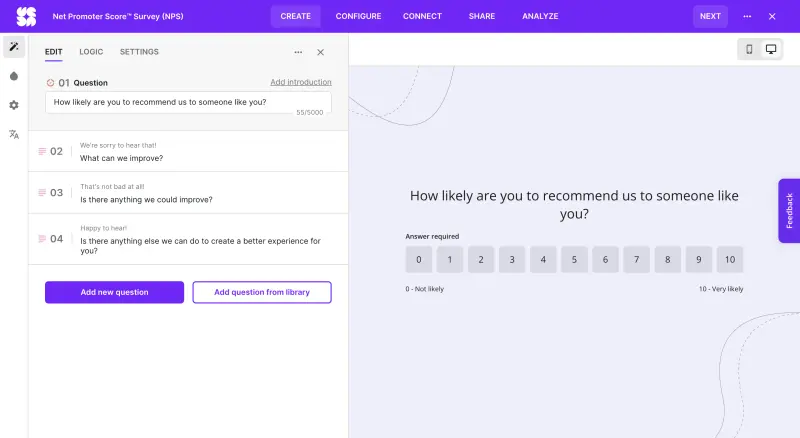
Survicate is a customer feedback platform for teams that want to collect feedback across email, website, in-product, and mobile channels, then push that feedback into the tools where actual work happens. In a Salesforce setup, that means your NPS, CSAT, CES, product feedback, or lead qualification answers don’t end up only sitting in a separate survey dashboard. They update Salesforce records and trigger follow-up workflows.
Survicate covers the full collection side: 400+ templates, AI-generated surveys from a prompt, and distribution across email, link, website, in-product, and mobile. What makes it relevant here is what happens after collection. Feedback maps to Salesforce fields, updates records, and can kick off the automations your team already has in place.
This gives teams a more complete view of the customer journey, not just what happened in Salesforce, but how people felt about it.
How does Survicate integrate with Salesforce?
Survicate offers a native, no-code Salesforce CRM integration that works in both directions. Survey responses flow from Survicate into Salesforce, mapping to fields across standard and custom objects. Salesforce data flows back into Survicate through merge tags and custom variables, so respondents can be identified and results filtered or analyzed by CRM attributes. You can test the full setup in a Salesforce Sandbox before switching to Production - no developer work needed either way.
In more practical terms, this means you can:
- embed Survicate surveys into Salesforce emails,
- update Salesforce fields when someone answers a survey,
- create or update leads, contacts, or accounts from Survicate contact forms,
- trigger Salesforce workflows based on survey responses,
- send follow-up emails from Salesforce after specific answers,
- build Salesforce dashboards using survey response data,
- use Salesforce attributes to segment and filter feedback in Survicate.
Note: Salesforce integration is only supported for Salesforce CRM (Sales Cloud) users.
What are some Survicate pros?
- Strong Salesforce field mapping: Survicate can map survey answers to existing fields across standard and custom Salesforce objects, so feedback can actually power segmentation, dashboards, routing, and workflows.
- Feedback stays operational: NPS, CSAT, CES, product feedback, or lead qualification answers can update Salesforce records instead of sitting in a separate survey dashboard.
- No-code setup with Sandbox testing: Teams can connect Salesforce without developer work and test the integration before switching to Production.
- Works across multiple survey channels: You can collect feedback through Salesforce emails, website, in-product, mobile, link, and email surveys, then bring those signals back into Salesforce.
- Research Hub as an AI research repository: Centralizes feedback from multiple sources, generates reports, and uses AI to detect patterns and surface themes. Salesforce-connected survey data gets analyzed alongside everything else, not in isolation.
- Positive integration-related community signals: G2 reviewers often mention Survicate’s integrations as one of the platform’s strengths, including Salesforce and Marketo.
What are some Survicate cons?
- Salesforce integration starts on Pro: Smaller teams looking for a basic Salesforce survey connection may need to upgrade.
- May be less suited for very complex enterprise programs: If you need heavy governance, highly advanced segmentation, or deeply customized VoC operations out of the box, heavier enterprise platforms may be a better fit.
- Sales Cloud only: Service Cloud teams won't get the same native integration.
- No embedded Salesforce dashboard: Feedback data flows into Salesforce for your team to build reports, but there's no native Survicate widget surfaced inside Salesforce the way for example Qualtrics and Medallia offer.
What can you do with Survicate and Salesforce?
The most popular use cases for using Survicate with Salesforce are tracking NPS and CSAT scores based on surveys run in Survicate, and then using those answers to:
- trigger notifications to different teams, for example notifying Customer Success when a detractor is identified,
- trigger emails in Salesforce, for example asking promoters for a review,
- create custom dashboards in Salesforce to monitor customer experience metrics,
- launch surveys after key Salesforce events, such as a closed case or deal,
- collect lead or contact data through website surveys and send it straight to Salesforce,
- move leads along the pipeline based on survey answers.
What about AI feedback analysis?
You can also use Survicate to level up feedback analysis outside Salesforce.
Survicate's AI research repository goes beyond what Salesforce dashboards can show you. Research Hub centralizes feedback from surveys and other connected sources, and uses AI to categorize responses, detect patterns, and generate reports.
CX, product, and UX teams can also ask questions across all connected feedback sources directly through Research Assistant. Put simply: Salesforce tells you what happened. Research Hub helps you understand why.
PS: if you want to dive deeper into this Salesforce survey tool integration, watch the dedicated webinar. It explains the setup step by step.
Feature highlights
- One-click integration without coding
- Salesforce Sandbox testing before switching to Production
- Mapping survey responses to Salesforce objects, both standard and custom
- Mapping responses to existing Salesforce fields, including custom fields
- Sending surveys based on Salesforce segments and lists
- Embedding surveys into Salesforce emails
- Triggering Salesforce workflows based on survey responses
- Triggering emails in Salesforce based on survey responses, for example asking promoters for a G2 review
- Creating or updating leads, contacts, and accounts from Survicate contact forms
- Syncing Salesforce attributes with Survicate to identify respondents and filter analysis
- Building custom Salesforce dashboards with survey responses
- Identifying Salesforce contacts and leads
- Notifying team members based on NPS/CSAT scores, for example after identifying detractors or promoters
- Using Research Hub to centralize survey and other feedback sources, generate reports, and explore patterns through AI-powered analysis and Research Assistant
Pricing
Survicate’s Salesforce CRM integration is available from the Pro plan (starting at $349/month) and up.
SurveyMonkey
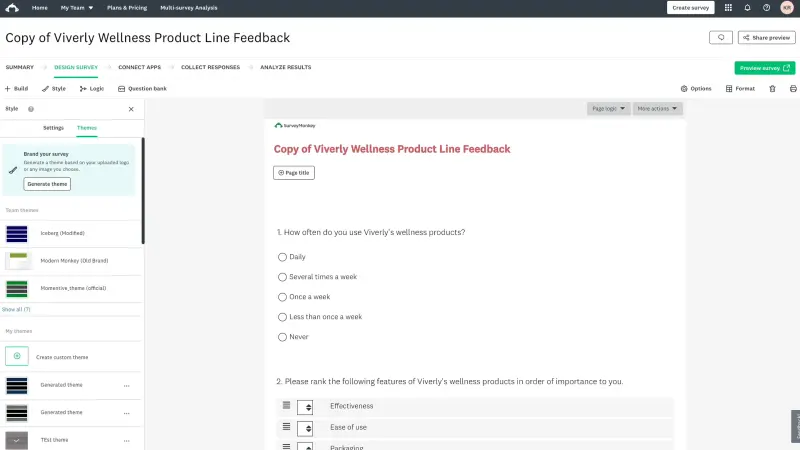
SurveyMonkey is a long-standing survey platform for building and sharing surveys, forms, NPS, CSAT, and other feedback programs across different teams and use cases. For Salesforce teams, its value is less about basic survey creation and more about triggering surveys from Salesforce events, then mapping responses back to Salesforce records.
How does SurveyMonkey integrate with Salesforce?
SurveyMonkey for Salesforce lets you automate survey sends from Salesforce Flows and push survey data back into Salesforce for reporting, dashboards, and follow-up actions. You can send surveys through a web link, SurveyMonkey email invitations, and SMS survey invites.
Some of the most common use cases include measuring CSAT, CES, or NPS after a closed case, sending surveys after events, collecting feedback after won or lost opportunities, and creating or updating Salesforce records based on SurveyMonkey responses.
The integration supports two main mapping paths:
- a managed package that sends responses into SurveyMonkey-created Salesforce objects,
- or custom object mapping if you want more control over where survey data lands.
Custom mapping can create new records, update existing ones, or update-or-create records using query mappings. It can also sync partial responses, not just completed submissions.
What are some SurveyMonkey pros?
- Strong Salesforce mapping options: You can use managed mapping for a simpler setup or custom object mapping for more control over standard and custom Salesforce objects.
- Good fit for event-triggered surveys: Salesforce Flows can trigger surveys after moments like case closure, events, or sales opportunity updates.
- Supports reporting inside Salesforce: Survey data can be pushed into Salesforce records and used in reports and dashboards.
- Newer SMS option: Enterprise customers with the Salesforce integration can add automated SMS survey invites alongside email and web links.
- Strong general ease-of-use signals: Users often praise SurveyMonkey for quick survey creation, templates, and a straightforward interface.
What are some SurveyMonkey cons?
- Enterprise-only integration: SurveyMonkey for Salesforce requires an Enterprise add-on, which makes it a bigger jump for teams that only need basic Salesforce survey workflows.
- Some workflows depend on the mapping type: For example, Salesforce reminder email instructions work with custom mappings and Weblink Collector, not with the managed package or SurveyMonkey Email Collector.
- SMS reach is limited: Automated SMS invites currently support phone numbers in the US, UK, Canada, and Australia, and require SMS credits.
- Community signals mention pricing and feature gating: G2 reviewers often praise ease of use, but pricing and advanced features locked behind paid tiers come up as recurring complaints.
Feature highlights
- Triggering SurveyMonkey surveys from Salesforce Flows
- Sending surveys through web links, SurveyMonkey email invitations, and SMS add-on invites
- Creating and updating Salesforce records using managed or custom mapping
- Mapping responses to standard and custom Salesforce objects
- Syncing partial responses to Salesforce
- Using query mappings to locate and update existing Salesforce records
- Building Salesforce reports and dashboards from survey data
- Copying mappings between SurveyMonkey accounts
- Connecting to Salesforce Sandbox before Production
Pricing
SurveyMonkey for Salesforce is an Enterprise add-on. SurveyMonkey also says the AppExchange integration is available to SurveyMonkey Enterprise and SurveyMonkey for CX customers, so you’ll need to contact Sales for pricing. Check out our deep-dive into SurveyMonkey's 2026 pricing here.
Zonka Feedback
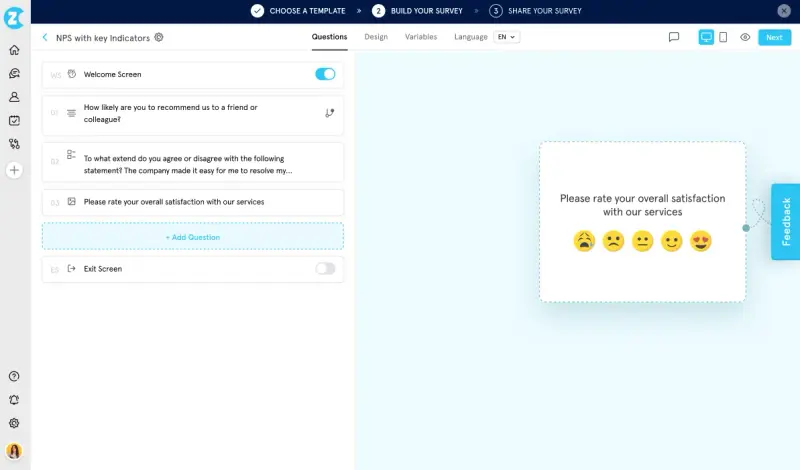
Zonka Feedback is a customer feedback platform covering multiple channels and use cases, from CSAT and NPS surveys to in-product, SMS, WhatsApp, and offline kiosk feedback. For Salesforce teams, the main draw is its native integration with two mapping options: flexible custom mapping and faster managed mapping for Contact-level CX metrics.
How does Zonka Feedback integrate with Salesforce?
Zonka Feedback integrates with Salesforce natively and can sync survey responses back to Salesforce in real time.
- With custom mapping, you can manually map survey fields to Salesforce objects like Contacts, Leads, Accounts, Opportunities, Cases, Activities, or custom objects.
- With managed mapping, Zonka Feedback uses its Salesforce package to automatically sync NPS, CSAT, CES, response counts, last response dates, and AI-generated sentiment to the Contact object.
The integration can also trigger Email and SMS surveys from Salesforce events, such as a new contact, closed case, or won deal. You can match respondents using Salesforce Contact IDs or email addresses, and create a new Contact automatically if no matching email is found.
What are some Zonka Feedback pros?
- Flexible custom mapping: You can push responses to standard and custom Salesforce objects, not just Contacts.
- Managed mapping for CX metrics: NPS, CSAT, CES, and AI sentiment can be synced directly to Salesforce Contact records.
- Good multichannel coverage: Zonka supports email, SMS, WhatsApp, web, in-app, and kiosk/offline feedback.
- Sandbox support: Teams can test the Salesforce setup before going live.
- Positive support and setup signals: Reviewers often praise Zonka Feedback’s ease of setup and responsive support.
What are some Zonka Feedback cons?
- Managed mapping is Contact-focused: It’s useful for fast CX metric sync, but if you need to sync feedback to Accounts, Opportunities, or Cases automatically, managed mapping won't cover you and you'll need to set up custom mapping manually.
- Salesforce-triggered surveys may depend on Salesforce setup: Zonka notes that outbound messages work best with Salesforce Enterprise edition or above.
- UI and advanced-feature friction: Some G2 users mention bugs, layout issues, or a learning curve with advanced automation and reporting.
Feature highlights
- Native Salesforce integration
- Custom mapping to standard and custom Salesforce objects
- Managed mapping for Salesforce Contact records
- Syncing NPS, CSAT, CES, response count, last response date, and AI sentiment
- Creating or updating Salesforce records from survey responses
- Triggering Email and SMS surveys from Salesforce events
- Matching respondents by Salesforce Contact ID or email address
- Creating new Salesforce Contacts when no email match is found
- Syncing tags and location data
- Salesforce Sandbox testing
Pricing
Zonka Feedback pricing is quote-based - you need to contact sales for a custom quote on Salesforce Custom Mapping and Managed Mapping respectively. The platform offers plans that scale based on feedback volume and channels used. G2 estimates place the Feedback Management tier at around $99/month and the AI Feedback Intelligence tier at around $799/month.
SurveyLab
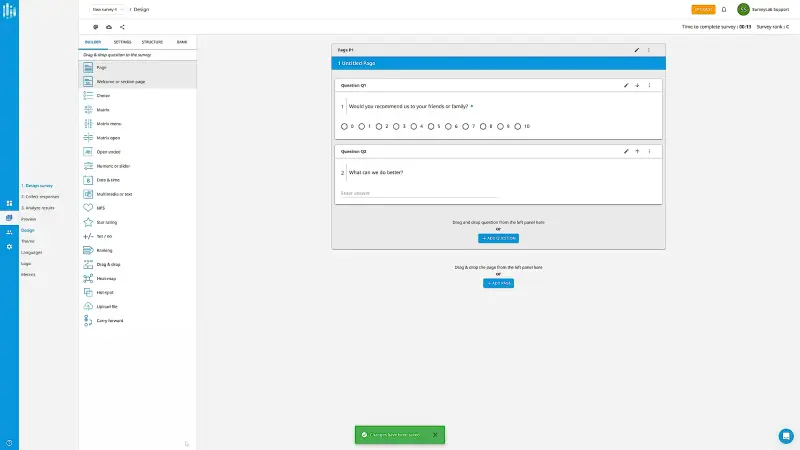
SurveyLab is a survey platform for building and distributing surveys through channels like email, SMS, QR codes, website widgets, pop-ups, and mobile collection. It’s a valid option for general survey work, but its Salesforce integration is much lighter than most tools on this list.
How does SurveyLab integrate with Salesforce?
SurveyLab offers a native Salesforce connection, but the integration mostly works by adding SurveyLab survey links to Salesforce email templates and passing Salesforce merge field values into SurveyLab as custom parameters.
So instead of syncing survey answers back into Salesforce records, you mainly use Salesforce to personalize and distribute the survey, while the responses stay in SurveyLab reports. Those Salesforce values, such as account name or contact email, can then help you identify respondents inside SurveyLab.
What are some SurveyLab pros?
- Simple Salesforce email setup: You can add SurveyLab survey links to Salesforce email templates without a complex integration project.
- Good respondent identification: Salesforce merge fields can be passed into SurveyLab, so responses are easier to match with customer details.
- Strong multichannel survey options: SurveyLab supports email, SMS, QR codes, widgets, pop-ups, mobile, and offline surveys.
- Positive ease of use signals: G2 reviews often point to SurveyLab’s usability, survey creation, and customer support as strengths.
What are some SurveyLab cons?
- Limited Salesforce depth: SurveyLab doesn’t appear to push survey responses back into Salesforce fields, objects, workflows, or dashboards.
- Not ideal for operational feedback loops: If you want survey answers to trigger Salesforce actions, update records, or power CRM reporting, this setup will likely feel too shallow.
- Salesforce value is mostly one-sided: The main use case is sending personalized survey links from Salesforce, not making Salesforce act on feedback.
- Community signals mention customization and pricing friction: G2 summaries point to limited customization and cost as recurring downsides.
Feature highlights
- Embedding SurveyLab survey links in Salesforce email templates
- Passing Salesforce merge field values into SurveyLab survey links
- Matching customer information with survey results inside SurveyLab
- Viewing survey responses in SurveyLab reports
- Multichannel survey distribution outside Salesforce
Pricing
SurveyLab’s Salesforce integration is available on the Professional and Enterprise plans. The Professional plan starts at $207/month when billed annually.
Qualtrics
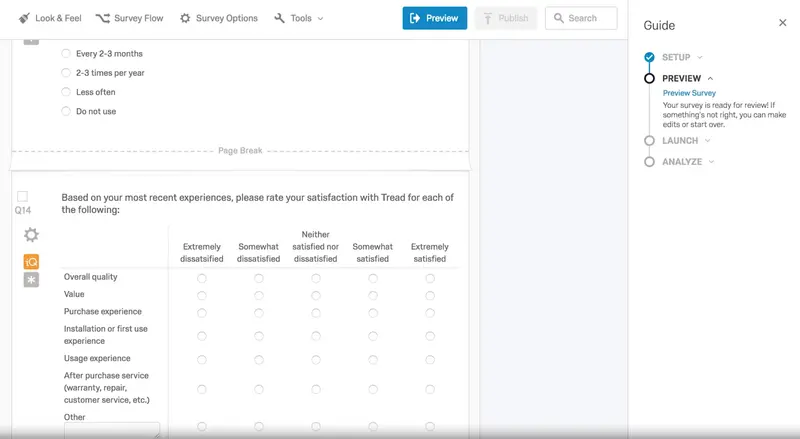
Qualtrics is an enterprise experience management platform built for large-scale CX, EX, product, and research programs. It offers a lot of flexibility and customization, but it’s a better fit for larger teams with complex feedback programs, technical resources, and the budget to support both.
How does Qualtrics integrate with Salesforce?
It’s worth separating two layers: the Salesforce Extension and the Qualtrics App in Salesforce.
The Salesforce Extension lets you trigger surveys from Salesforce events and send response data back into Salesforce. Common use cases include sending a CSAT survey after a case is closed, collecting feedback after an account change, or creating leads in Salesforce from survey responses.
Qualtrics Response Mapping can insert, update, upsert, or delete Salesforce records, and it can also post to Chatter. That gives teams a lot of control over how survey responses map back to standard or custom Salesforce objects.
The Qualtrics App in Salesforce adds another layer for larger programs. It lets teams send relational surveys to multiple Leads, Contacts, or entire Campaigns from inside Salesforce, access pre-built Salesforce objects for survey data, and view Qualtrics dashboards or widgets inside Salesforce.
What are some Qualtrics pros?
- Deep Salesforce integration: Qualtrics can trigger surveys from Salesforce events and map responses back into Salesforce records.
- Strong record mapping options: Response Mapping supports insert, update, upsert, delete, and Chatter actions.
- Good fit for large CX programs: The Qualtrics App in Salesforce supports bulk relational surveys to Leads, Contacts, and Campaigns.
- Dashboard visibility inside Salesforce: Teams can view Qualtrics dashboards and widgets directly in Salesforce.
- Powerful analytics layer: Community reviews often praise Qualtrics for deep insights, reporting, text analytics, and enterprise-grade dashboards.
What are some Qualtrics cons?
- Overkill for simpler feedback loops: If you only need NPS or CSAT synced into Salesforce fields, Qualtrics may be more platform than you need. Teams expecting self-service typically discover that they need at least one trained administrator to manage the platform ongoing.
- Heavier than a standard Salesforce survey setup: Qualtrics can require licensing checks, Response Mapping, Flows, AppExchange installation, permissions, and more admin coordination than most tools in this comparison.
- Some Salesforce features require the right license: Qualtrics notes that features like Trigger, Email Survey, and Response Mapping may need to be added to your license.
- Pricing isn’t disclosed: You need to contact Qualtrics for a quote, and costs often put it out of reach for most mid-market teams.
- Steep learning curve: Reviewers regularly mention complexity, setup time, and a less intuitive interface as downsides.
Feature highlights
- Triggering Qualtrics surveys from Salesforce events
- Creating new Salesforce leads from Qualtrics survey responses
- Sending surveys from Salesforce emails
- Mapping survey responses back to Salesforce records
- Inserting, updating, upserting, or deleting Salesforce records
- Mapping data to standard and custom Salesforce objects
- Posting survey response activity to Chatter
- Sending surveys to multiple Leads, Contacts, or Campaigns from Salesforce
- Viewing Qualtrics dashboards and widgets inside Salesforce
- Linking some surveys to Sandbox and others to Production
Pricing
Qualtrics’ broader CX and enterprise packages are quote-based. Its only public self-serve paid plan starts at $420/month, billed annually, with 1,000 responses included. That’s a Strategic Research plan, not a full Salesforce-connected CX setup, so enterprise pricing will depend on your products, usage, and implementation needs.
Medallia
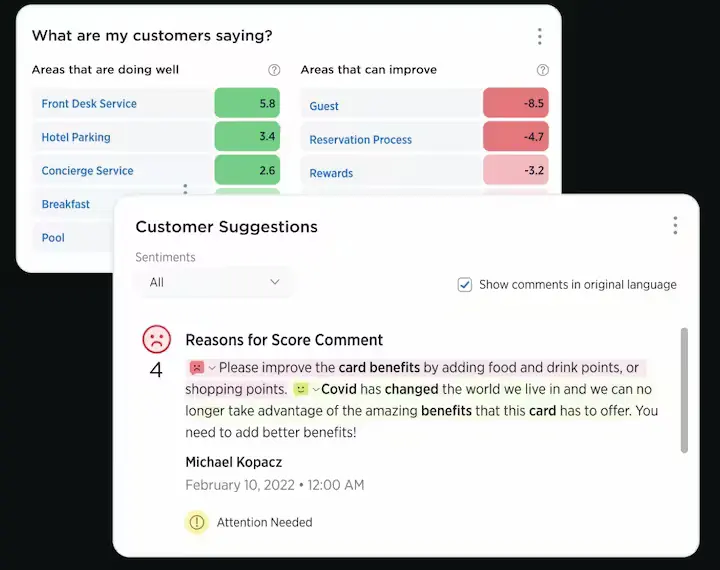
Medallia is an enterprise experience management platform for large CX, service, sales, and contact center programs. It’s not the tool you pick just to spin up a quick NPS survey and call it a day. It’s a better fit when Salesforce is part of a larger CX machine and you want customer signals, account context, and follow-up actions working together.
How does Medallia integrate with Salesforce?
Medallia for Salesforce connects Medallia Experience Cloud with Salesforce Sales Cloud and Service Cloud. The integration brings customer feedback and Medallia analytics into Salesforce, while also letting teams trigger feedback requests from key Salesforce moments, such as sales cycle events, account touchpoints, or service interactions.
In practice, this means Salesforce users can see Medallia insights in context, where they already work. Account teams can spot advocates and detractors, service teams can prioritize follow-up, and leaders can connect customer sentiment with operational CRM data instead of chasing feedback in a separate silo.
Medallia’s Salesforce connector also supports targeted invitation management, event-driven feedback requests, push notifications, embedded experience insights, and closed-loop actions. So compared with lighter survey tools, this is less “send a survey and sync the answer” and more “wire customer feedback into the way your Salesforce teams already operate.”
What are some Medallia pros?
- Strong enterprise Salesforce fit: Medallia is built for Sales Cloud and Service Cloud teams running larger CX programs, not just one-off surveys.
- Event-driven feedback requests: Teams can trigger feedback collection from key Salesforce moments across sales, account management, and service journeys.
- Embedded insights in Salesforce: Medallia can surface customer feedback, analytics, and account-level insights inside Salesforce.
- Closed-loop workflows: Teams can use alerts, notifications, and follow-up actions to prioritize detractors, recover accounts, and act on feedback faster.
- Good for contact center and service recovery: Medallia also has Salesforce apps focused on post-interaction feedback, agent coaching, and service recovery.
- Strong analytics layer: Community signals often praise Medallia for insights generation, feedback management, dashboards, and enterprise-grade reporting.
What are some Medallia cons?
- Limited fit outside enterprise sales and service teams: Medallia's Salesforce integration is built around Sales Cloud and Service Cloud use cases at scale. Teams outside that context, such as product teams running in-product feedback programs or smaller CX teams, will likely find the platform over-engineered for what they need and better served by a lighter tool.
- Pricing can be hard to predict: Medallia uses quote-based pricing tied to Experience Data Records, so costs may become less predictable as data volume grows.
- Learning curve and implementation effort: G2 reviewers regularly mention complexity and onboarding effort, and the Salesforce setup is usually more involved than with no-code survey integrations.
- Enterprise contract commitments: Medallia typically involves a formal enterprise sales process and multi-year contracts, which can be a real barrier for teams that want to start small on a monthly plan and scale gradually.
Feature highlights
- Salesforce Sales Cloud and Service Cloud integration
- Salesforce AppExchange apps/connectors
- Triggering feedback requests from Salesforce events
- Targeted invitation management
- Embedded Medallia insights inside Salesforce
- Push notifications in Salesforce, Chatter, or email
- Automated closed-loop feedback actions
- Follow-up cases in Salesforce based on feedback rules
- Account-level advocate and detractor visibility
- Contact center, service recovery, and agent coaching use cases
- AI-powered analytics across multiple experience signals
Pricing
Medallia does not publish fixed plan pricing. It uses an Experience Data Record pricing model, where pricing is based on customer and employee experience data flowing into Medallia Experience Cloud.
Typeform
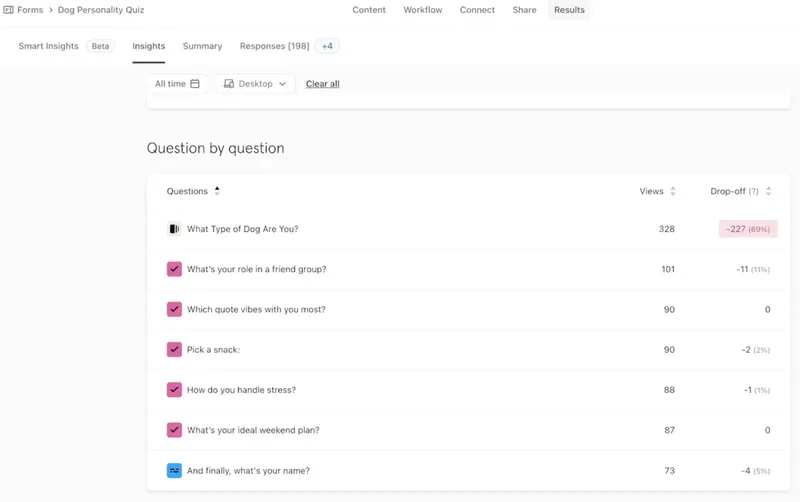
Typeform is a form and survey builder known for polished, conversational forms. It’s not a full CX platform, but for Salesforce teams that want a smoother way to send form responses into the CRM, it can do some more than just collect pretty answers.
How does Typeform integrate with Salesforce?
Typeform’s Salesforce integration lets you send form answers into Salesforce and use them to create or update records. You can map answers to standard objects like Leads, Contacts, Accounts, Cases, and Opportunities, as well as custom objects.
Typeform has two Salesforce integration paths. Create with Salesforce is the newer setup, designed to let you connect Typeform questions to Salesforce fields while building the form. If you’re not on Custom Growth, Typeform points you to its Salesforce Classic integration, which uses a more traditional app setup from the Connect panel.
With Create with Salesforce, the flow is simple: ask the question, map the answer, send it to Salesforce. You can also use primary keys to update existing records instead of creating duplicates.
That said, Typeform is mostly about turning form submissions into Salesforce records. It works well when you want to qualify leads, create contacts, open cases, or enrich CRM data from a form. It’s less of a fit if you need advanced feedback workflows, closed-loop follow ups, or enterprise VoC reporting.
What are some Typeform pros?
- Solid Salesforce record mapping: You can map answers to standard and custom Salesforce objects and create or update records.
- Lead capturing capabilities: Typeform works well for qualification forms, demo requests, contact forms, applications, and other entry points into Salesforce.
- Custom object support: You’re not limited to basic Lead or Contact creation.
- Partial response sync is available: With partial submit points, Typeform can sync partial responses into Salesforce.
- Usability: Reviewers often praise Typeform for design and ease of use.
What are some Typeform cons?
- Not a full Salesforce survey workflow tool: Typeform is good at turning form submissions into Salesforce records, but less suited for advanced NPS/CSAT programs tied to Salesforce events.
- Plan confusion: Typeform offers different Salesforce integration paths, and the one available to you depends on your subscription.
- Some field types are unsupported: File Upload and Payment questions are not supported by the Salesforce integration.
- Pricing and response limits can bite: G2 reviewers mention that Typeform gets expensive as usage grows.
Feature highlights
- Mapping Typeform responses to Salesforce fields
- Creating or updating Salesforce records from form submissions
- Mapping to standard Salesforce objects, including Leads, Contacts, Accounts, Cases, and Opportunities
- Mapping to custom Salesforce objects
- Using primary keys to update existing records
- Partial response sync with partial submit points
- Sandbox installation support
- Salesforce AppExchange/managed package setup
- Custom object mapping
- Lead capture, case creation, qualification, and CRM enrichment use cases
Pricing
Typeform lists Salesforce integration under its Growth Flow plan, which starts at $266/month when billed annually. The newer Create with Salesforce setup requires a Growth Custom account, while non-Growth Custom users can use Salesforce Classic. In practice, it’s worth confirming which Salesforce integration version you need before buying, because the plan requirement depends on the setup.
ProProfs
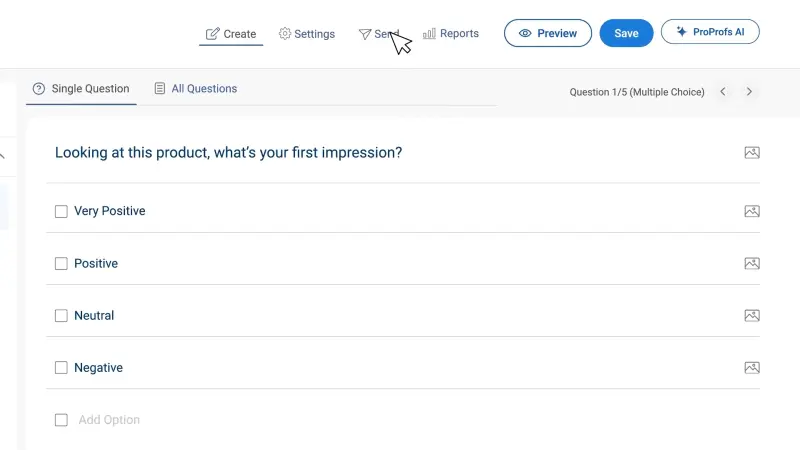
ProProfs Survey Maker is part of the broader ProProfs product suite, which also includes tools for quizzes, training, knowledge bases, live chat, and help desk workflows. The Survey Maker itself is aimed more at lightweight survey, form, quiz, and lead-capture use cases than complex enterprise feedback programs.
How does ProProfs integrate with Salesforce?
ProProfs Survey Maker integrates with Salesforce to send surveys, sync survey data, analyze responses inside Salesforce, and create leads by mapping survey responses into Salesforce fields.
The integration can also send surveys in bulk to Salesforce contacts, cases, leads, and campaign members, and ProProfs says surveys can be triggered based on Salesforce events, such as subscription renewals, product updates, or pricing changes.
Still, compared with more Salesforce-heavy tools on this list, the public documentation is pretty light on the details. ProProfs talks about syncing data and mapping survey fields, but doesn’t clearly describe advanced Salesforce object mapping, workflow logic, sandbox support, or deeper admin controls.
What are some ProProfs pros?
- Easy survey creation: Reviews point to ease of use, quick setup, and simple survey creation as ProProfs strengths.
- Basic Salesforce sync: You can sync survey data with Salesforce and map responses into Salesforce fields.
- Useful for lead capture: ProProfs can create Salesforce leads from survey responses.
- Bulk survey sending: Surveys can be sent to Salesforce contacts, cases, leads, and campaign members.
- Affordable entry point: Paid plans start lower than many feedback platforms that integrate with Salesforce.
What are some ProProfs cons?
- Salesforce documentation is thin: ProProfs doesn’t give much public detail on mapping depth, supported objects, Salesforce workflow setup, or reporting limits.
- Likely too light for advanced CRM feedback workflows: If you want survey answers to reliably update specific Salesforce objects, trigger complex automations, or power detailed CRM reporting, you’ll best validate the setup carefully.
- Advanced integrations sit on higher plans: Salesforce integration is available on the Enterprise plan.
- UI and export friction: G2 users mention dated design, cluttered UI, limited customization, and occasional formatting issues.
Feature highlights
- Syncing survey data between ProProfs Survey Maker and Salesforce
- Analyzing survey responses inside Salesforce
- Creating Salesforce leads from mapped survey responses
- Sending surveys to Salesforce contacts, cases, leads, and campaign members
- Triggering surveys based on Salesforce events
- Mapping survey fields to Salesforce fields
- Using Salesforce for customer retention, upsell, and churn-related workflows
Pricing
ProProfs lists Salesforce under Advanced Integrations, available on the Enterprise plan starting at $149.99/month, billed annually.
Surveypal
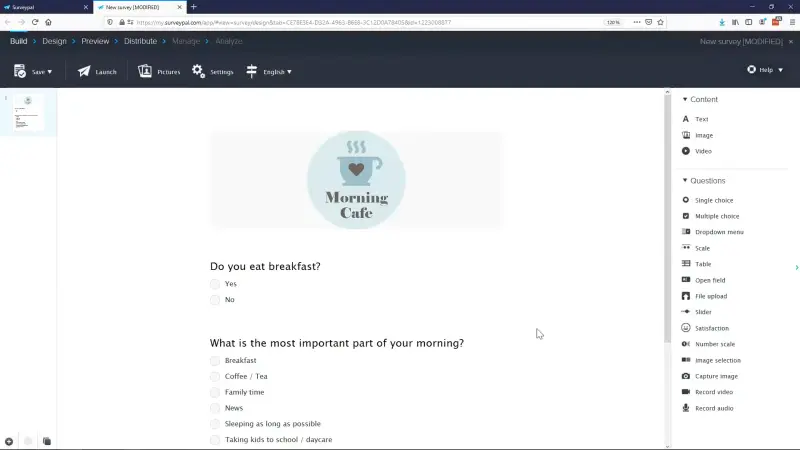
Surveypal is a survey and CXM platform for teams that want to collect, analyze, and act on customer feedback. It leans more toward customer service and CX analysis than lightweight survey creation, but its Salesforce integration is still practical for post-interaction feedback loops.
How does Surveypal integrate with Salesforce?
Surveypal can trigger personalized surveys from Salesforce based on customer data, events, or milestones, such as a closed deal, resolved support case, onboarding step, or renewal moment.
Responses can then be synced back into Salesforce and mapped to Salesforce object fields, so you can update or create records instead of manually exporting feedback data. You can also link feedback to specific Salesforce objects, such as accounts, contacts, opportunities, or cases, and analyze survey responses alongside CRM data.
Surveypal also supports automatic feedback notifications to have you alerted when new survey responses come in.
What are some Surveypal pros?
- Useful for post-interaction surveys: Good fit for CSAT, NPS, and CES surveys after sales, support, onboarding, or renewal milestones.
- Salesforce object mapping: Responses can be mapped to Salesforce fields and used to update or create records.
- Personalized survey invites: Surveys can use Salesforce customer data, which helps keep feedback tied to the right CRM context.
- Automatic notifications: Teams can be notified when new feedback comes in.
- Strong service/CX angle: Surveypal’s broader CXM product adds feedback analysis, sentiment analysis, summaries, and root cause analytics.
What are some Surveypal cons?
- Not the cheapest entry point: The Survey Tool starts at €299/month, which can feel quite expensive, and pricing depends on response volume.
- Salesforce documentation is practical, but not super detailed: The docs explain mapping and object updates, but there’s less public detail on advanced workflow design or Salesforce reporting depth.
- May be too service-focused for simple survey needs: If you only need a basic Salesforce survey sync, Surveypal may feel heavier than necessary.
Feature highlights
- Triggering surveys based on Salesforce events or milestones
- Sending personalized surveys using Salesforce customer data
- Mapping survey responses to Salesforce object fields
- Updating or creating Salesforce records from survey responses
- Linking feedback to accounts, contacts, opportunities, or cases
- Analyzing survey responses alongside Salesforce data
- Automatically notifying team members about new feedback
- Supporting NPS, CSAT, and CES surveys
Pricing
Surveypal’s Survey Tool starts at €299/month, with pricing based on the number of responses collected.
Mopinion
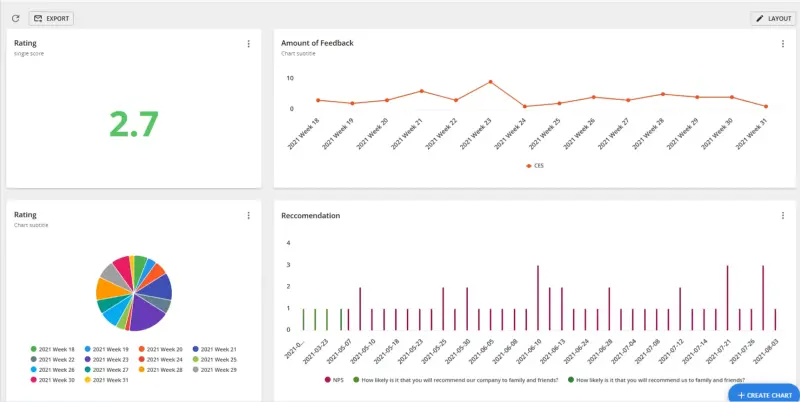
Mopinion is a feedback survey platform focused on digital channels: websites, email, and apps. It’s a good fit for teams that want to collect feedback across digital touchpoints, especially website and product experience feedback.
How does Mopinion integrate with Salesforce?
Connecting Mopinion with Salesforce comes down to pushing feedback and contact details from Mopinion into Salesforce Forms. The most visible use case is creating support or service cases through Salesforce Web-to-Case, although Web-to-Lead is also an option for creating new sales leads.
Technically, this is not a simple one-click Salesforce integration. Mopinion’s setup uses a Mopinion webhook and Salesforce form endpoints. This is how it works:
- you create the relevant form in Salesforce,
- link its fields to your Mopinion feedback form fields,
- and then share the endpoint details with Mopinion support to complete the setup.
Once connected, Mopinion can post incoming feedback and contact information directly to Salesforce, so support or sales teams can follow up from inside the CRM. This is useful if your main goal is to turn website or app feedback into cases or leads, but it’s much lighter than tools that map survey responses to Salesforce fields, update existing records, or trigger advanced Salesforce workflows.
What are some Mopinion pros?
- Useful for support follow-up: Feedback and contact details can be posted into Salesforce Web-to-Case, so teams can handle incoming feedback as cases.
- Web-to-Lead is also available: Mopinion can support lead creation through Salesforce Web-to-Lead.
- Good form customization: Reviews mention flexible feedback forms, custom styling, and screenshot capture as useful features.
What are some Mopinion cons?
- Salesforce setup is more technical: You need a Mopinion webhook, Salesforce form endpoints, field linking, and help from Mopinion support.
- Limited Salesforce depth: The focus is on Salesforce Forms, not updating contacts, accounts, opportunities, or custom objects.
- Not ideal for CRM-wide feedback workflows: If you want field mapping, Salesforce dashboards, workflows based on triggers, or two-way sync, Mopinion will likely feel limited.
- Usability friction: G2 reviews point to a learning curve, some trial and error setup, and analytics usability issues.
Feature highlights
- Sending Mopinion feedback and contact details to Salesforce
- Creating Salesforce support or service cases from feedback
- Creating Salesforce leads through Web-to-Lead
- Using Salesforce Web-to-Case/Web-to-Lead with Mopinion webhooks
- Linking Mopinion feedback form fields to Salesforce form fields
- Collecting feedback across websites, apps, and email
- Capturing digital journey feedback, including website and app pain points
Pricing
Mopinion’s Standard plan starts at €279/month, while Enterprise starts at €999/month. Final pricing depends on channels and volume, including websites, email, and app sessions. Mopinion does not clearly list Salesforce integration on its public pricing page.
Which Salesforce survey tool should you choose?
The right Salesforce survey tool depends on what you want feedback to do once it’s collected.
For lightweight survey distribution and simple Salesforce sync: SurveyLab, ProProfs, and Typeform work well for narrower jobs: sending personalized survey links from Salesforce emails, capturing leads, or using polished forms to create and update Salesforce records. They don’t cover the full feedback loop, but if your needs are simple, they can be easier and more affordable places to start.
For CX-focused feedback programs and post-interaction surveys: Zonka Feedback, Surveypal, and Mopinion are better suited to service and CX use cases, such as syncing NPS, CSAT, and CES into Salesforce, collecting feedback after support or onboarding milestones, or turning website and app feedback into Salesforce cases or leads. SurveyMonkey also fits here for teams running broader survey programs triggered from Salesforce events.
For enterprise VoC programs with complex governance and dedicated resources: Qualtrics and Medallia are built for exactly that, though both come with enterprise contracts, heavier implementation work, and pricing that reflects the scale they're designed for.
For teams that want the full collect, analyze, act loop without enterprise cost or complexity: Survicate covers the middle ground most growing teams actually operate in. Survey answers sync into Salesforce fields in real time, responses trigger Salesforce workflows, and Salesforce attributes flow back into Survicate for targeting and analysis. Research Hub then brings feedback from surveys and other sources, generates reports, and lets teams explore patterns through AI and Research Assistant.
In practice, a low CSAT score can alert Customer Success. A promoter response can trigger a review request. A contact record can reflect how sentiment shifts over time.
That's what separates a useful Salesforce survey integration from one that just adds another dashboard nobody checks. Feedback becomes part of how your team already works.
Author’s note (last verified: 17 June 2026): Statements such as ‘best’ reflect our opinion and typical use cases, not a universal guarantee. This comparison is based on publicly available information and our best understanding at the time of writing. Vendors may change features, pricing, and packaging without notice. For the latest details, please check the official sources or reach out to the vendor directly.